
Investigating the Impact of Real-World Environments on the Perception of 2D Visualizations in Augmented Reality
Overview
This project explores how real-world environments influence the perception of 2D visualizations in Augmented Reality (AR), with a focus on industrial applications. Through two user studies conducted in a simulated production plant, the research examines the effects of visual background complexity and secondary tasks on user performance and subjective experience. The findings aim to inform the design of AR systems for productive, real-world scenarios.Objectives
- Understand Background Influence: Determine how real-world backgrounds (e.g., clutter, motion, lighting) affect the perception and performance of AR visualizations.
- Evaluate Task Complexity: Assess how the complexity of visualizations (e.g., number of data points) interacts with background environments.
- Simulate Real-World Scenarios: Introduce secondary tasks (e.g., monitoring industrial displays) to mimic multitasking in industrial settings.
- Bridge Measured vs. Subjective Perception: Compare objective performance metrics (e.g., task time, accuracy) with users’ self-reported experiences.
Study Parameters & Tasks

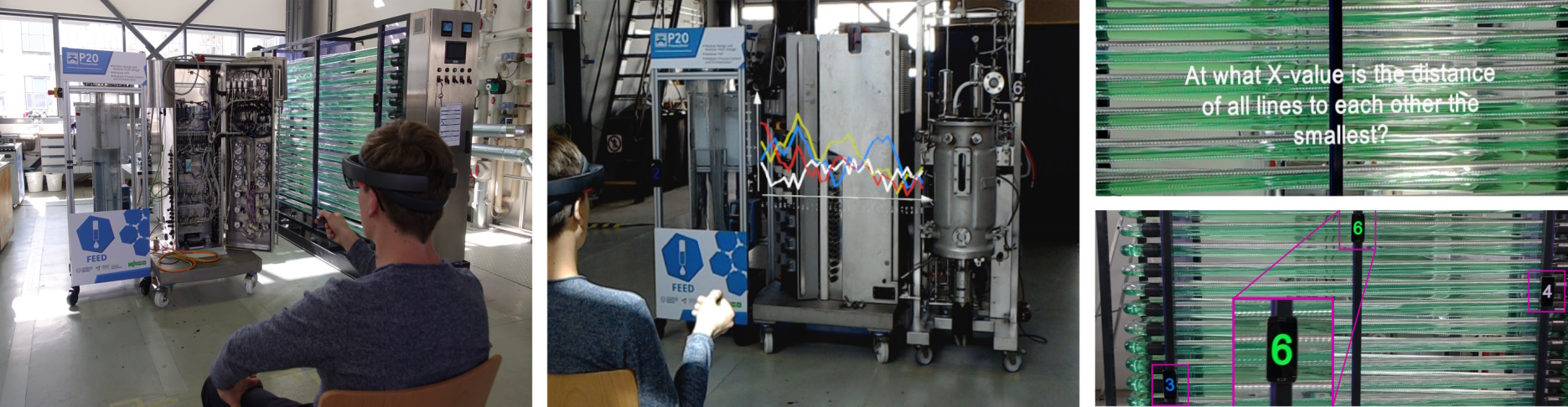
In our two studies, we investigated the influence of 4 different background configurations, which were created in the P2O-Lab. We used BG1, BG2, and BG3 in Study 1, and BG3 and BG4 in Study 2 (see the figure above). In general, participants had to solve different tasks on line charts that were placed in front of the mentioned background configurations (the data for the visualizations can be found in the supplemental material).
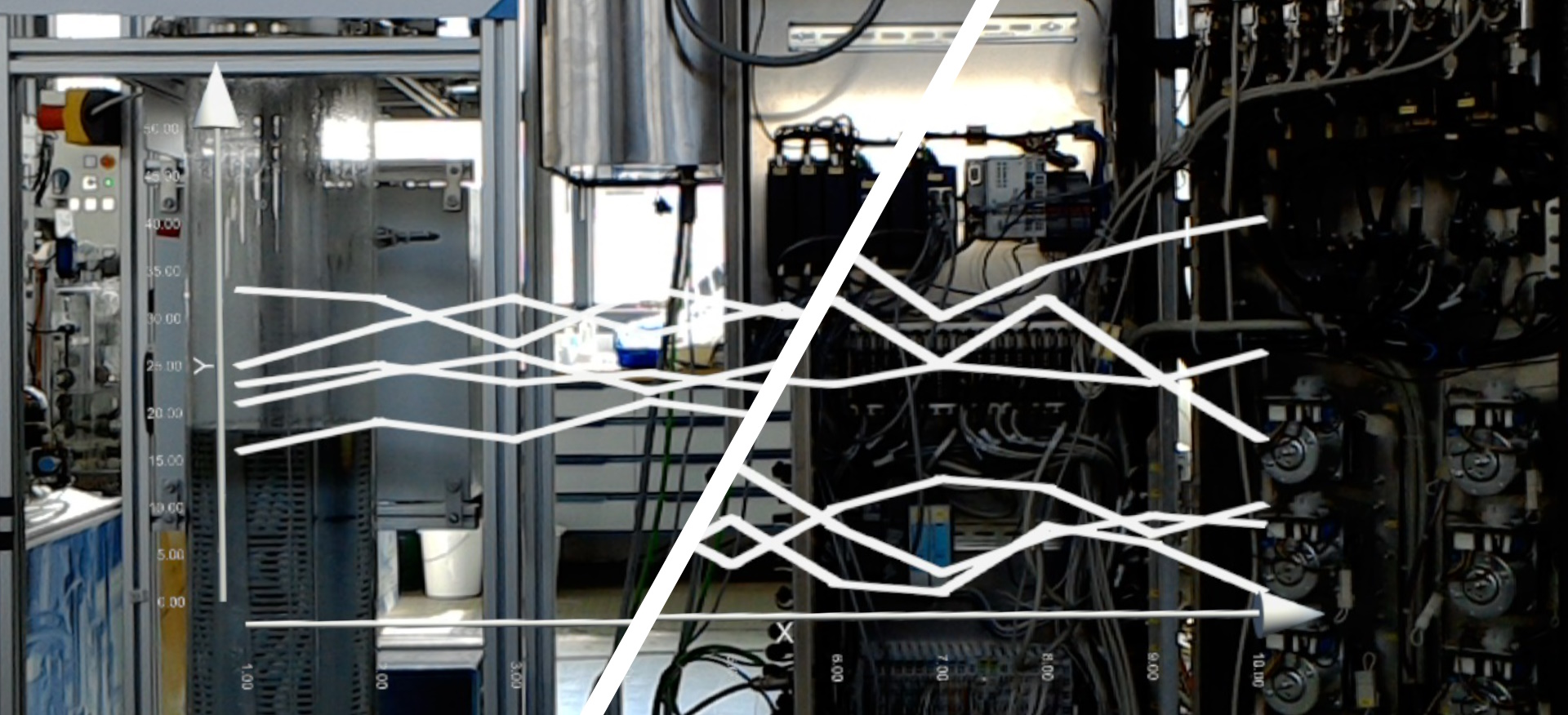
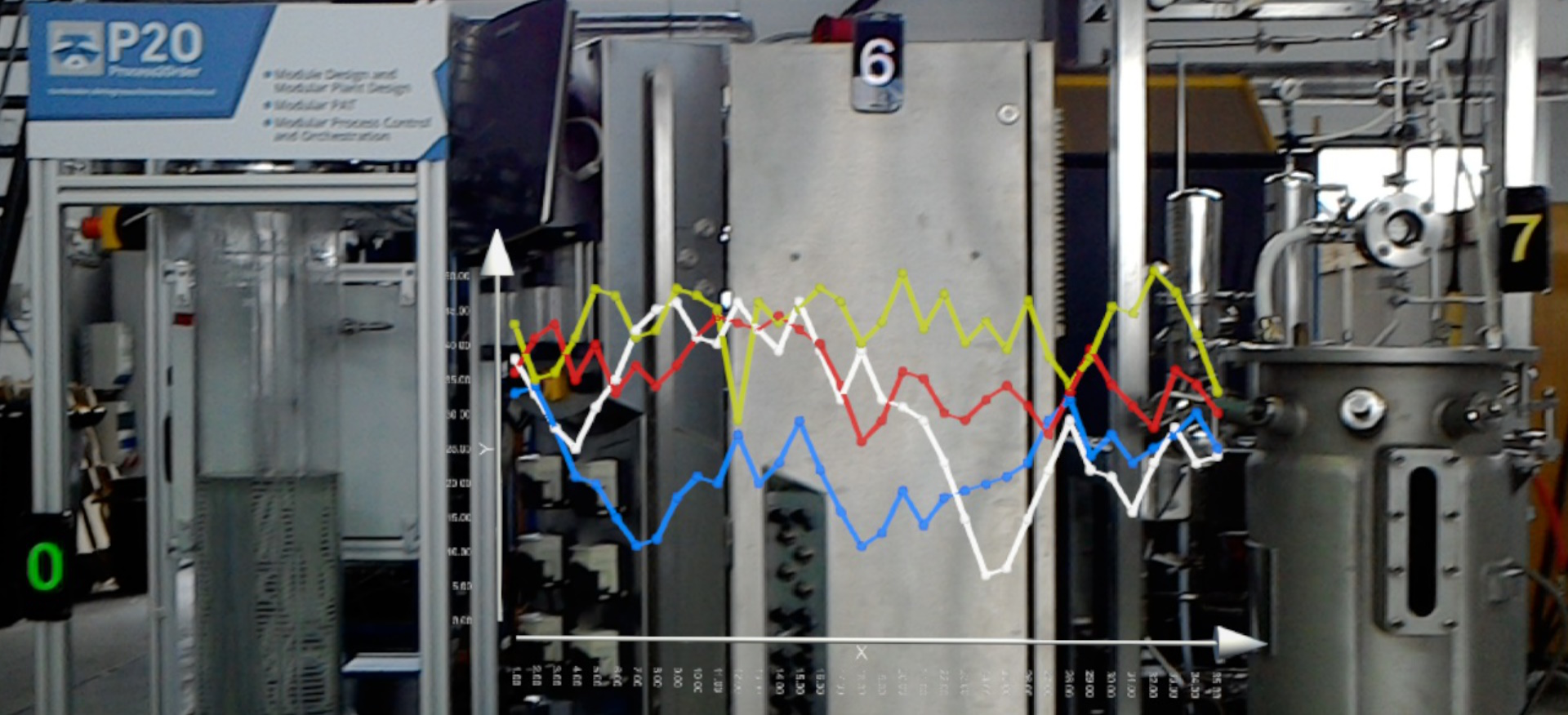
In Study 1, we also altered the visualization complexity of the presented line charts. We created 5 different levels of complexity, which were based on the number of data points in the whole visualization. Those are 40, 50, 60, 60, and 70 data points which were altered by the number of lines and data points per line (see the figure to the right).
In Study 2, we fixed the visualization complexity to 140 data points, while introducing another independent variable: a secondary task. This additional condition was either on or off. While this additional task was active, the participants also had to focus on the background as they had to react as soon as a green colored number appeared on one of the three additional placed displays.
Outcomes
Based on the results of our two studies, we were able to formulate several outcomes that can be used to inform the design of AR systems for productive, real-world scenarios:
- The background has only marginal influence on the perception of visualizations shown in AR: We do not consider it advisable to prioritize adjustments to the real environment, as the decrease in performance based on more distracting environments is minimal.
- There is more than visual clutter that defines a background and its influence on the perception: Possible further parameters to consider are crowding, depth perception of real-world scenes, or the dynamics of the background, while a learned classifier working with human labeled and rated images could be beneficial as well.
- User perceive a visually cluttered background as more distracting than it actually affects their overall performance: We can see a difference between the measured and perceived performance of the users, showing that a greater focus on user experience could help in the design phase of user interfaces or visualizations for such AR applications.
- Various task or visualization parameters could have an influence on the real and perceived performance: The usage of various visual parameters (e.g, visualizations types, visual marks) or another secondary task, like changing parameters of a running production machine, could enhance or decrease the influence of the environment such an AR application is used in.